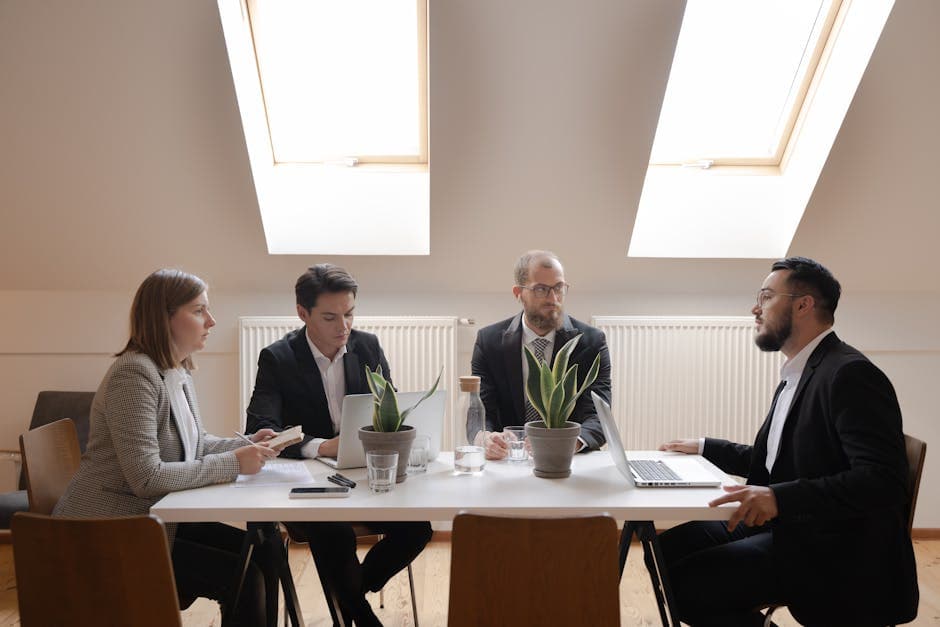
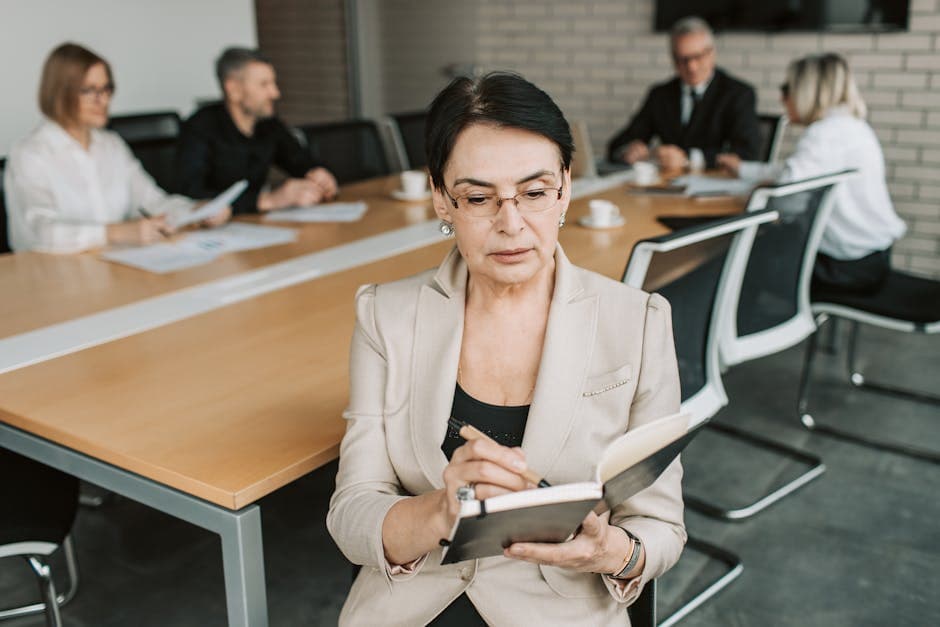
You can say all the right words and still look unsure if your body language is sending the opposite message. In interviews, meetings, and high-stakes conversations, seating posture and hand gestures shape how confident, credible, and composed you appear before you finish your first answer. The good news: this is not about acting bigger than you are. It is about looking grounded, open, and intentional so your message lands the way you mean it to.
What Confident Body Language Actually Looks Like
Confident presence is rarely dramatic. It is usually quiet control. The strongest candidates do not sprawl, fidget, or freeze. They look settled in the chair, breathe normally, and use gestures that support what they are saying instead of distracting from it.
A confident seated posture usually includes:
- Feet planted or at least stable
- Hips back in the chair so your spine is supported
- Shoulders relaxed, not pulled into your ears
- Chest open without puffing up
- Head level with a natural chin position
- Hands visible and calm when not gesturing
Your gestures should feel like visual punctuation. They help emphasize structure, contrast, and conviction. Think of your hands as tools for clarity, not performance.
"I want to highlight three things that mattered most here."
That line becomes stronger when paired with a small, controlled counting gesture. The gesture gives your answer shape. Structure reads as confidence.
Fix Your Seated Posture Before You Start Talking
Most people try to correct posture by sitting ramrod straight. That usually creates tension, not confidence. Instead, build a position you can hold for the length of the conversation.
Start With Your Base
Your lower body affects everything above it. If your legs are unstable, the rest of you starts compensating.
Use this quick setup:
- Sit so your hips are fully supported by the chair.
- Place both feet flat on the floor if possible.
- Keep knees at a natural angle, not squeezed together rigidly and not spread too wide.
- Distribute weight evenly instead of leaning to one side.
This creates a stable base, which makes you look anchored rather than tentative.
Align Without Going Rigid
Now stack the upper body in a way that looks engaged.
- Keep your back long, but do not force a military-straight spine.
- Let your shoulders drop naturally.
- Keep your chin parallel to the ground.
- Lean slightly forward when listening or emphasizing an important point.
That slight forward lean is powerful. It signals interest and ownership. Too much lean can feel aggressive or anxious; too much recline can read as detached. Aim for a subtle, intentional angle.
Keep Your Hands Where They Can Be Seen
Hidden hands make people seem guarded. You do not need to display them theatrically, but you should avoid burying them under the table, stuffing them between your knees, or crossing your arms.
A good resting position is:
- Hands lightly on the table
- One hand relaxed over the other in your lap
- Fingertips gently touching in a low-key steeple only if it feels natural
The goal is visible calm.
Use Hand Gestures That Add Clarity, Not Noise
The best hand gestures are simple, measured, and connected to meaning. Interviewers notice when your hands look frantic, repetitive, or disconnected from your words.
The Most Useful Gesture Types
These gesture patterns tend to work well in interviews and leadership conversations:
- Counting gestures for listing points
- Open-palm gestures for transparency and collaboration
- Small framing gestures to define scope or contrast ideas
- Directional gestures when describing sequence, timeline, or change
- Precision gestures like a small pinch or narrow spacing when discussing detail
For example, if you say, "There were two main challenges," showing a gentle two-finger count can reinforce your answer. If you say, "We narrowed the scope," bringing your hands slightly inward supports the message visually.
Match Gesture Size To The Setting
In person, gestures can be a little broader. On video, bigger often looks exaggerated. For virtual interviews, keep most gestures within the frame between your chest and lower shoulder line.
This is especially important if your camera is close. Wide movements near the lens can feel chaotic. Compact gestures look more controlled on screen.
If you want extra pre-call preparation, pair this with the guidance in MockRound's article on using the "power pose" before your camera turns on to boost confidence. It helps you enter the conversation with more ease before posture and gestures even come into play.
The Specific Habits That Quietly Undermine Confidence
Many candidates are not lacking confidence. They are leaking nervousness through small repetitive movements. These habits are common, but they are fixable once you know what to watch for.
Posture Mistakes
Watch out for these:
- Perching on the edge of the chair the whole time
- Collapsing the chest and rounding the shoulders
- Leaning too far back and appearing disengaged
- Tilting the head down while speaking
- Constantly shifting weight left and right
Perching can make you look like you are ready to escape. Slouching can make your voice sound smaller. Over-reclining can signal overconfidence or low interest.
Hand Gesture Mistakes
These are the most distracting:
- Fidgeting with rings, pens, sleeves, or a laptop edge
- Repeating the same chopping motion every sentence
- Pointing too often
- Hiding hands under the desk
- Touching your face repeatedly
- Folding arms when challenged
These behaviors create visual static. They pull attention away from your message and can make even strong answers feel less believable.
"Let me take a second and think through the best example."
That is far stronger than filling the pause with fidgeting. A calm pause with still hands reads as self-command.
How To Look Confident In Virtual Interviews
Video changes body language. The frame is tighter, eye contact is less intuitive, and even small movements can look amplified. You need a version of confidence that works on camera.
Build A Camera-Friendly Setup
Use these adjustments:
- Raise your camera to eye level.
- Sit far enough back that your shoulders and upper torso are visible.
- Put both feet on the floor, not wrapped around chair legs.
- Rest your hands where they can naturally rise into frame.
- Check that your chair does not encourage slumping.
If only your face is visible, your gestures disappear and your posture can look compressed. Showing some upper body gives you room to appear more natural.
Use Camera Eye Contact Strategically
You do not need to stare into the lens for every second. That would feel unnatural. Instead:
- Look into the camera when delivering your opening line or a key takeaway
- Look at the screen when listening closely
- Return to the camera when making a strong point
This creates the impression of connection without robotic staring.
Slow Down Slightly On Video
On camera, speed reads as nerves faster than it does in person. Let your gestures land a fraction slower. Finish a point, reset your hands, then continue. That rhythm communicates control.
A Simple Practice Routine For Natural Confidence
You do not fix nonverbal presence by telling yourself to "relax." You fix it by rehearsing a few physical defaults until they become familiar.
The 10-Minute Drill
Try this before an interview:
- Sit in your interview chair and set your camera.
- Practice your opening answer for 60 seconds.
- Watch for one posture issue and one hand issue only.
- Repeat with a stable base, relaxed shoulders, and visible hands.
- Practice one story using counting gestures for structure.
- Record again and compare.
Do not try to eliminate every movement. The goal is not perfect stillness. The goal is intentional movement.
A good rehearsal prompt is a behavioral answer you already need to sharpen. For example, if you are preparing a project story, this guide on how to answer "Walk Me Through a Project You Delivered Successfully" is a useful script to practice with posture and gestures.
What To Notice In Playback
When reviewing your recording, ask:
- Do I look stable in the chair?
- Are my shoulders lifting when I get nervous?
- Do my hands disappear too often?
- Are my gestures tied to actual points?
- Do I lean in when I want to sound engaged?
- Do I look comfortable holding a pause?
This kind of review is where real improvement happens. If you want live repetition under pressure, MockRound can help you practice answers while paying attention to how your delivery actually comes across.
What Interviewers And Leaders Read From Your Nonverbal Signals
Body language does not replace substance, but it changes how substance is received. Interviewers often make fast judgments about whether someone seems ready to handle visibility, pressure, and ambiguity.
Your seated posture and gestures influence whether you appear:
- Calm under pressure
- Trustworthy and open
- Organized in your thinking
- Comfortable with authority
- Present and engaged
That matters even more in leadership-oriented interviews, client-facing roles, and cross-functional positions. People are not just asking, "Is this answer correct?" They are asking, "Would I trust this person in the room when something important is on the line?"
Confident nonverbal communication answers that question before you say it directly.
Related Interview Prep Resources
- How to Project Confidence Through Your Seating Posture and Hand Gestures
- How to Answer "Walk Me Through a Project You Delivered Successfully" for a Project Manager Interview
- How to Use the "Power Pose" Before Your Camera Turns On to Boost Confidence

Practice this answer live
Jump into an AI simulation tailored to your specific resume and target job title in seconds.
Start SimulationYour Best Pre-Interview Reset
The night before or ten minutes before, do not obsess over every limb. Use a short reset that gives you a reliable baseline.
The 5-Point Check
Run through this quickly:
- Feet grounded
- Back supported
- Shoulders relaxed
- Hands visible
- Breath steady
That is enough. Confidence is not a special pose you perform for strangers. It is a set of visible choices that make you look settled, clear, and ready.
If you remember one thing, make it this: your goal is not to look powerful in an artificial way. Your goal is to remove signals of discomfort so your actual ability comes through.
FAQ
Should I keep my hands still the whole interview?
No. Stillness is not the same as confidence. Completely frozen hands can make you look overly rehearsed or tense. What you want is controlled movement. Let your hands rest calmly when you are listening, then use natural gestures to emphasize structure, contrast, or priority when speaking. If you tend to over-gesture, focus on pausing your hands at the end of each sentence instead of eliminating movement altogether.
Is it okay to lean back in my chair?
A little, yes. Too much, no. A slight recline during listening can look comfortable and composed, but sustained leaning back often reads as distance or low engagement. In most interviews, your default should be upright with occasional small forward leans when you want to show focus, interest, or ownership. Think balanced, not rigidly forward and not casually sprawled.
What should I do with my hands when I am not talking?
Pick a neutral resting position and return to it consistently. Good options include resting your hands lightly on the table, placing one hand over the other in your lap, or keeping them loosely together near your midline. Avoid hiding them, crossing your arms, or touching your face. A reliable resting position reduces fidgeting and helps you look more composed during pauses.
Do hand gestures matter as much on video calls?
Yes, but they need to be smaller and more deliberate. On video, gestures can either make you look expressive and clear or distractingly animated. Keep them within the visible frame and use them to support key points rather than every sentence. Also remember that posture often matters even more on camera because the frame magnifies slouching, head tilt, and nervous movement.
Can posture really change how confident I feel?
Yes, because posture affects both breathing and self-perception. When you are collapsed or cramped, it is harder to breathe steadily and speak with ease. When you are grounded and open, your voice usually sounds fuller and your pacing improves. Posture will not magically create skill, but it can remove unnecessary physical stress so your thinking comes through more clearly.

Executive Coach & ex-VP Engineering
Jordan led engineering organizations through rapid scaling and now coaches senior ICs and managers on leadership presence, high-stakes communication, and interview performance under pressure.