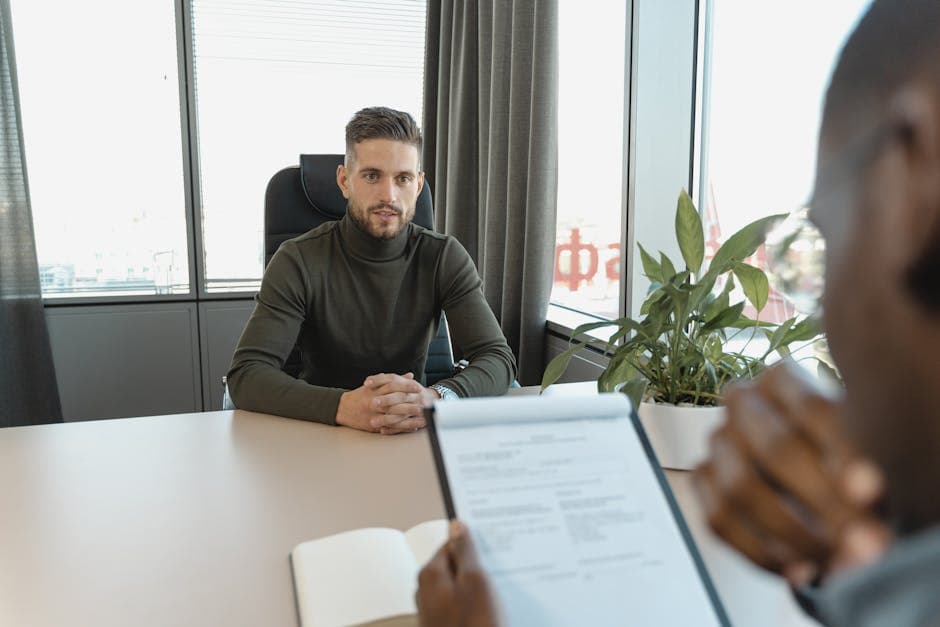
A surprise skills assessment can feel like a trap, but most interviewers are not waiting for you to fail. They are watching for adaptability under pressure: how fast you orient yourself, how clearly you communicate, and whether you can make progress when the prompt is unfamiliar. If you treat the moment like a performance of perfection, you will tighten up. If you treat it like a short, collaborative problem-solving session, you immediately look more senior, more composed, and far more hireable.
What This Assessment Is Actually Testing
When a recruiter or hiring manager drops an unexpected exercise into the process, they are usually measuring much more than raw skill. They want to see whether you can handle ambiguity, reset quickly, and make reasonable decisions without a perfect plan.
In practice, they are often evaluating:
- Composure when the format changes
- Learning speed when the task is unfamiliar
- Communication style under mild stress
- Prioritization when time is limited
- Self-correction when you notice a mistake
- Coachability if they offer a hint
This matters because many real jobs do not unfold neatly. Priorities shift. Tools break. A stakeholder asks for something new ten minutes before a meeting. A surprise assessment is a compressed version of that reality.
A useful reframe: the interviewer is often less interested in whether you instantly know the answer than in whether you show productive behavior when you do not.
"I haven’t seen this exact format before, so I’m going to take a moment to frame the problem, state my assumptions, and work through it step by step."
That sentence does two things at once: it buys you time and signals maturity under pressure.
How To Respond In The First 60 Seconds
Your first minute matters because it sets the emotional tone. Candidates who panic tend to rush into the task, hide their thinking, and create avoidable mistakes. Candidates who look adaptable do the opposite: they slow down just enough to regain control.
Use this sequence:
- Acknowledge the task calmly. Do not apologize for being surprised.
- Clarify the goal. Ask what success looks like.
- Confirm constraints. Time, tools, expected depth, and whether questions are allowed.
- State your approach out loud. Give the interviewer a map.
- Start with the highest-value action. Do not over-plan.
A simple script can sound like this:
"Got it. Before I jump in, I want to confirm the objective: are you looking for my final answer, my process, or both? I’ll outline my approach first, then work through the task and call out tradeoffs as I go."
That is what adaptability looks like in conversation. It is not fake confidence. It is visible structure.
If the assessment is technical, this same principle applies. Clarify inputs, outputs, constraints, and edge cases. If it is situational, clarify the audience, business context, and success criteria. If it is a gamified or unusual format, the same advice from MockRound’s piece on The Rise of "Gamified" Interviews: How to Stay Calm During Skills Assessments becomes especially useful: do not confuse novelty with danger. Treat the exercise as a system to learn, not a verdict on your worth.
The Behaviors That Signal Adaptability Fast
Interviewers infer adaptability from behavior, not self-description. Saying “I’m very adaptable” is weak. Showing a pattern of flexible, grounded decision-making is strong.
Think Out Loud Without Rambling
The goal is not to narrate every thought. The goal is to expose your decision-making checkpoints.
Good examples of what to say:
- "I see two possible approaches, and I’m choosing this one because time is limited."
- "I’m making one assumption here; if that assumption changes, I’d adjust in this direction."
- "I’m not fully certain yet, so I’m going to test the simplest version first."
That language shows flexibility, not fragility. It tells the interviewer you can move without pretending to know everything.
Recover Cleanly From Mistakes
A mistake is not automatically damaging. A defensive response is. Strong candidates do three things when they notice an error:
- Name it directly
- Correct it efficiently
- Continue without spiraling
For example: "I realized I optimized for the wrong constraint. Let me correct that and re-prioritize based on speed rather than completeness."
That is exactly the kind of self-correction many teams want.
Use Hints Well
If the interviewer nudges you, do not act embarrassed. Take the hint, apply it, and keep moving. Being coach-ready is a form of adaptability. Many candidates waste precious time trying to prove independence when the smarter move is to demonstrate responsiveness.
Stay User- or Outcome-Focused
Even in a surprise test, anchor your answer to impact. For example, a frontend candidate discussing accessibility could say they would prioritize semantic structure, keyboard navigation, and screen-reader clarity before polishing visuals. That kind of answer aligns with practical thinking described in How to Answer "How Do You Approach Accessibility in Your Work" for a Frontend Developer Interview. Adaptable candidates return to outcomes when the path gets messy.
A Simple Framework For Any Surprise Task
When you do not know what to do, use a repeatable framework. A good one is Pause, Clarify, Prioritize, Execute, Reflect.
1. Pause
Take a breath. Read or listen carefully. Do not start from adrenaline. Start from comprehension.
2. Clarify
Ask focused questions such as:
- What is the main goal?
- How much time do I have?
- Should I optimize for speed, accuracy, creativity, or completeness?
- Am I expected to explain my thinking as I go?
3. Prioritize
Pick the highest-impact first move. In a coding task, that may be defining the data flow or a basic working solution before optimization. In a writing or case exercise, it may be structuring the response before filling in detail.
4. Execute
Work visibly. Break the task into chunks. Use clear signposting like “First,” “Next,” and “If time permits.” Interviewers love candidates who make progress legible.
5. Reflect
With a minute left, summarize what you did, what tradeoffs you made, and what you would improve next. Reflection shows adaptation in real time, not just after the fact.
You can even state it plainly: "Given more time, I’d validate this assumption, test edge cases, and refine the final version, but for this window I focused on the most critical path."
Sample Answers You Can Actually Use
Most candidates need language, not just theory. Here are practical scripts for different moments.
If You Need A Moment To Reset
"I’d like 20 seconds to organize my thoughts so I can give you a structured answer."
Short, calm, and professional. No apology needed.
If The Task Is Unfamiliar
"I haven’t used this exact setup before, but I can still reason through the objective, identify constraints, and explain how I’d approach a working solution."
This shows confidence without bluffing.
If You Realize You Took The Wrong Path
"I’m noticing that my current approach is heavier than the problem requires. I’m going to simplify and focus on the fastest way to demonstrate the core result."
That sounds adaptive because it is. You are re-scoping intelligently.
If You Need To Make An Assumption
"Since that detail isn’t specified, I’m going to assume X for now and call out how my answer would change if the assumption is different."
Interviewers often reward this because it mirrors real-world work.
If You Finish Incomplete
"I didn’t fully complete the final layer, but I did establish the structure, validate the main approach, and identify the next step I’d take."
An incomplete task can still earn a strong evaluation if your thinking is organized and transparent.
Common Mistakes That Make You Look Less Adaptable
The fastest way to weaken your performance is not lack of skill. It is behavior that signals rigidity, panic, or ego.
Watch for these mistakes:
- Rushing before understanding the prompt
- Talking nonstop instead of thinking clearly
- Freezing after one mistake
- Pretending certainty when you are guessing
- Ignoring hints because you want to appear independent
- Overbuilding instead of meeting the actual requirement
- Apologizing repeatedly, which drains authority
One subtle mistake is over-focusing on impressing instead of solving. Candidates sometimes reach for the most advanced answer when a simple, practical one would better fit the constraints. Adaptability is not maximalism. It is choosing the right response for the situation in front of you.
Another mistake is failing to narrate tradeoffs. If the interviewer cannot see your reasoning, they may assume you are improvising randomly. Make your choices visible.
How To Prepare Before The Surprise Happens
You cannot predict the exact assessment, but you can train the underlying skill. That is the real edge.
Use this prep plan:
- Practice unfamiliar prompts on purpose. Give yourself tasks outside your ideal format.
- Time-box your answers. Try 5-, 10-, and 20-minute versions.
- Record yourself thinking out loud. Notice where you ramble or go silent.
- Rehearse recovery language. Prepare one sentence for mistakes, assumptions, and resets.
- Review core frameworks.
STAR, issue trees, prioritization matrices, and basic troubleshooting logic all help. - Simulate pressure. Ask a friend to interrupt, add constraints, or change the prompt halfway through.
This kind of training is far more valuable than memorizing polished lines. You are building response flexibility, not just content recall.
If you want repetition with realistic interview pressure, this is where structured mock practice helps. A platform like MockRound can surface the exact weak spots that usually appear in surprise assessments: talking in circles, skipping clarification, or failing to summarize clearly.
Related Interview Prep Resources
- How to Showcase Your Adaptability During a Surprise Skills Assessment
- How to Answer "How Do You Approach Accessibility in Your Work" for a Frontend Developer Interview
- The Rise of "Gamified" Interviews: How to Stay Calm During Skills Assessments

Practice this answer live
Jump into an AI simulation tailored to your specific resume and target job title in seconds.
Start SimulationAlso, study your own patterns after each mock. Ask:
- Where did I lose composure?
- Did I clarify success criteria?
- Did I explain tradeoffs clearly?
- How did I respond when I got stuck?
- Did I finish with a useful summary?
That review loop is how adaptability becomes visible performance, not just a trait on your resume.
How To End Strong When Time Runs Out
The final minute is where many candidates fade. Do not let the assessment just stop. Close it with structure.
A strong ending includes three parts:
- What you accomplished
- What tradeoffs you made
- What you would do next
For example:
"I prioritized a functional first pass over a fully optimized version so I could validate the main approach within the time limit. If I had another ten minutes, I’d test edge cases, refine the final output, and tighten the explanation for stakeholders."
That kind of close leaves the interviewer with a memory of judgment, not incompletion.
This is also a good moment to show self-awareness without self-criticism. You are demonstrating that you can assess your own work, which is one of the clearest signs of adaptability.
If you want a deeper companion read on this exact topic, the refreshed guide How to Showcase Your Adaptability During a Surprise Skills Assessment pairs well with this article because it reinforces the same core principle: your reaction is part of the answer.
FAQ
What if I completely blank during a surprise skills assessment?
Do not try to fill the silence with panic. Pause, breathe, and say something structured like: "I want to take a moment to organize the problem before I answer." Then identify the goal, constraints, and first step. Interviewers are usually more forgiving of a brief reset than of chaotic guessing. A blank moment becomes damaging only if it turns into visible loss of control.
Should I admit when I do not know something?
Yes, but do it in a way that preserves momentum. The wrong move is a flat "I don’t know" followed by silence. The better move is: "I don’t know that exact detail, so I’m going to reason from first principles and state my assumptions." That shows honesty, problem solving, and intellectual flexibility.
How much should I talk through my thinking?
Enough that the interviewer can follow your logic, but not so much that your explanation replaces progress. Aim to verbalize decisions, assumptions, tradeoffs, and corrections. If you find yourself narrating every tiny thought, pause and summarize instead. Good candidates make their reasoning visible; great candidates make it easy to follow.
Can a surprise assessment still go well if I do not finish?
Absolutely. Many candidates are judged more on prioritization and approach than on full completion. If time runs out, summarize what you solved, what remains, and what you would do next. A partial solution delivered with clear judgment and calm communication often performs better than a rushed, messy attempt at full completion.
What is the best way to practice adaptability before interviews?
Practice outside your comfort zone. Use unfamiliar prompts, tight time limits, and interruptions. Rehearse how you clarify, recover, and summarize. The point is not to become comfortable with every task; it is to become reliable when comfort disappears. That is the essence of interview adaptability, and it is exactly what employers notice.

Executive Coach & ex-VP Engineering
Jordan led engineering organizations through rapid scaling and now coaches senior ICs and managers on leadership presence, high-stakes communication, and interview performance under pressure.